
Plumbing Support for Water Damage, Mitigation & Insurance Claims
When plumbing causes water damage, stopping the leak is only the beginning. The Classic Plumber works with homeowners, property managers, mitigation companies and remediation contractors to identify the plumbing source, make necessary repairs and provide clear documentation of the plumbing work performed.

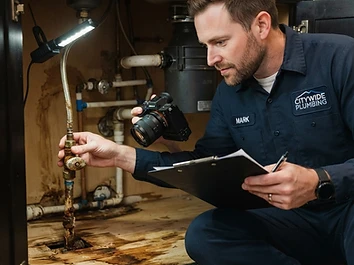
Find the Source. Stop the Damage. Document the Repair.
A leaking supply line, failed water heater, broken pipe, overflowing fixture or hidden plumbing leak can quickly turn into a water-mitigation project.
We can handle the plumbing portion of the loss while the mitigation or remediation company handles drying, demolition, cleaning and restoration. That means stopping the water at its source, making the necessary plumbing repairs, and documenting what we found and what we did — so the claim file has what it needs.
Plumbing Support for Restoration Professionals
We work directly with water-mitigation and remediation companies when a licensed plumbing professional is needed to isolate the source of a water loss, remove or disconnect plumbing components, perform repairs, or restore plumbing after remediation work is complete.
Clear Plumbing Documentation for the Claim File
When requested, we can provide organized documentation of the plumbing conditions we observed and the plumbing work performed. This can help homeowners, property managers, restoration contractors and insurance professionals understand what caused the plumbing-related damage and what was required to correct it.
Documentation may include:
Important — What We Don't Do
Our documentation describes the plumbing conditions we observed and the plumbing work performed. We do not:
- • Determine insurance coverage
- • Approve claims
- • Negotiate claim settlements
- • Act as a public adjuster
- • Guarantee reimbursement
- • Determine the monetary value of covered property damage
"Our documentation describes the plumbing conditions we observed and the plumbing work performed. Coverage and reimbursement decisions remain with the property owner and their insurance carrier."
Helping Identify the Plumbing Source
When the source can reasonably be identified, our service documentation can describe the plumbing component involved and what we observed during diagnosis.
Examples of identified plumbing sources:
Careful Terminology
We use careful, factual language in our documentation:
We avoid unsupported statements about negligence, insurance liability, coverage, code responsibility, or the exact time/date a loss began — unless independently established. Our role is to document what we observe and what we repair, not to make determinations that are outside the scope of plumbing work.
Documenting What We Find
Water-loss projects often move quickly. When appropriate, we photograph the plumbing condition before disturbing it so there is a record of what was found. We can also document the repair and completed plumbing connections after the work is finished — giving the claim file a clear before-and-after picture of the plumbing portion of the loss.
One Less Thing for the Restoration Team to Coordinate
We understand that mitigation and remediation work often depends on plumbing being isolated, removed or restored at the right time. We can coordinate our plumbing work with the restoration contractor so demolition, drying, reconstruction and plumbing repairs can happen in the proper sequence — not on top of each other.
Documentation for Managed Properties
For property managers, we can provide clear service descriptions, technician notes, before-and-after photographs and invoices that help document what occurred at the property and what was repaired. This makes it easier to communicate with owners, tenants, and insurance professionals about the plumbing portion of a water-loss event.
Reconstruction After Water Damage?
When reconstruction follows a water loss, we can handle the plumbing modifications — from reconnection and rough-in changes to new fixture installation during the rebuild. We coordinate with restoration contractors to keep the plumbing portion of reconstruction on schedule.
Remodel PlumbingDealing with water damage?
We'll find the source, make the repair, and document the work.