Gas Line Plumbing Services in Knoxville, TN
Gas line installation, repair, and leak detection — done safely, to code, and leak-tested before it goes back in service.

Symptoms Knoxville homeowners call us about
- Adding a gas appliance and need a new line run
- Gas smell — leave the home and call the utility first, then us for the repair
- Appliance won't stay lit or has a yellow flame instead of blue
- Old or corroded gas line needing replacement
- Utility flagged a leak that needs repair
- Switching to a higher-demand appliance and the existing line is undersized
- Need a gas line for a tankless water heater, range, or dryer
A gas smell is always a safety issue — leave the home and call the gas utility before anyone works on the line. After the utility has made the area safe, we locate the leak, repair the line, and leak-test before it goes back in service. A yellow or flickering flame can also indicate a gas or venting problem, and an appliance that won't stay lit may have a gas supply issue or a failing component.
Still not sure what's going on?
Our AI Plumber can help you narrow it down — describe what you're seeing and it'll walk you through likely causes, safe checks, and whether it's a DIY job or time to call a professional.
What's usually behind these problems
- —Corroded or cracked gas pipe (common in older black steel or galvanized lines)
- —Failed fitting or threaded connection
- —Damaged or aged appliance connector
- —Improper installation or undersized line for the appliance's demand
- —Shifting soil cracking a buried line
- —Corrosion at threaded joints from decades of use

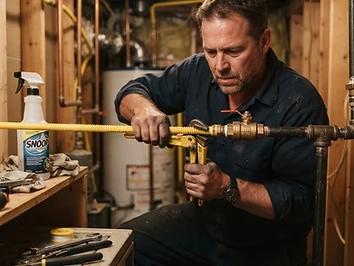
Safe, code-compliant gas work — three distinct services
Gas leak detection is about confirming whether a leak exists and finding its location. After the utility has made the area safe, we use appropriate gas-detection and testing methods to narrow and confirm the leak source along accessible piping or at fittings where conditions allow. Some concealed or intermittent leaks may require additional isolation or testing before the exact repair area can be confirmed.
Gas line repair is about fixing known damaged piping. Once the leak is located, we repair or replace the affected section with code-compliant gas piping — black steel, CSST, or approved alternative — and leak-test the entire line before it goes back in service. Flexible appliance connectors are replaced, not repaired.
Gas line installation is about running a new line for an appliance. We size the line to the appliance's BTU demand and the total connected load, run it cleanly with code-compliant piping and fittings, and leak-test before it goes in service. An undersized line starves the appliance and is unsafe — proper sizing is not optional.
How we diagnose and fix it

- 01Make the area safe
If there's a leak, the gas utility shuts off gas first. We never work on a live gas leak — the utility secures the area before we begin.
- 02Locate or assess
For a leak, we use gas-detection and testing methods to narrow and confirm the source. For a new installation, we assess the route and the appliance's BTU demand.
- 03Size the line
For a new line, we size it to the appliance's demand and the total connected load — an undersized line is unsafe.
- 04Repair or install
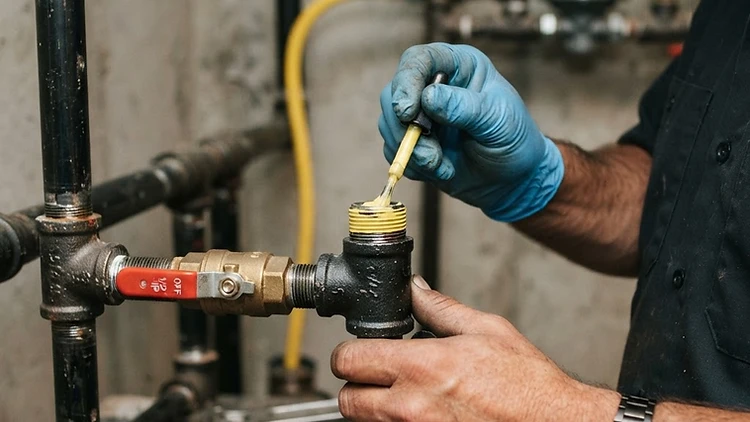
We repair the leak or run the new line with code-compliant gas piping and fittings, using proper sealant on every threaded connection.
- 05Leak-test
We leak-test every gas line — new or repaired — before it goes back in service. This is essential for safety and required by code.
Gas Work Is Safety Work — Done to Code
- If you smell gas, leave the home and call the gas utility before anyone works on the line — a plumber never works on a live leak.
- Gas lines must be sized to the appliance's BTU demand and the total connected load — an undersized line starves the appliance and is unsafe.
- We leak-test every gas line before it goes back in service — new or repaired. This is required by code and essential for safety.
- Flexible appliance connectors are replaced, not repaired — a damaged connector is a leak risk.
- Proper venting of gas appliances is part of a safe installation — we confirm venting is correct before the appliance goes in service.
- Gas work may require a permit and inspection — we handle the permitting process and ensure the work meets local code.
- When the utility has shut off gas due to a leak, they may require a pressure test and a plumber's sign-off before restoring service — we provide that.
Gas Plumbing Issues We Commonly See in Knoxville Homes
Many older Knoxville homes have galvanized or black steel gas lines that corrode over decades, and appliance connectors that have aged past their safe service life. We replace corroded lines and old connectors with code-compliant gas piping, sized to today's higher-demand appliances like tankless water heaters and gas ranges.
When Knoxville homeowners upgrade to a tankless water heater, the existing gas line is often undersized for the new unit's higher BTU demand. We size and run a properly sized gas line so the tankless heater performs safely and efficiently — an undersized line starves the burner and causes problems.
Learn more about gas line
Real questions, straight answers
Tank, tankless, gas, electric, and point-of-use. From no-hot-water emergencies to planned upgrades — diagnosed honestly and done right.
ToiletsRunning, leaking, weak-flushing, or won't flush at all — we fix every common toilet problem and replace units when repair no longer makes sense.
FaucetsDrips, low pressure, hard-to-shut-off handles, and cartridge failures — repaired or replaced for Moen, Delta, Kohler, American Standard, Pfister and more.
Drain CleaningKitchen sinks, showers, tubs, floor drains, and main sewer lines — cleared properly and kept clear, not just pushed downstream.
Property manager? We handle plumbing for rentals and portfolios.
Tenant coordination, documentation, approval workflows, and turnover repairs — built for property management.
Rather have us handle it?
Request service from The Classic Plumber — Knoxville's plumbing expert.